
Why a better attribution model isn’t the answer
The "which model is right?" question is the wrong one; the fix is repositioning attribution around your marketing strategy, not swapping the box.
You know a channel is working. You’ve heard it in customer interviews, users tell you they found you there, and the qualitative signal is consistent. Then you walk into the planning meeting, someone pulls up the dashboard, and you can’t prove it. Paid social, podcasts, the channel you’re confident about: the numbers won’t back you up, so the budget conversation turns into a fight you keep losing.

The usual response is to blame the model. It’s not fair to this channel, another company had better luck with a different one, so maybe first click, maybe data-driven, maybe something else. The other response is to blame the tracking: we’re losing data to consent, the setup isn’t firing right, let’s capture more.
Both feel productive. Neither fixes the meeting.
I’ve watched teams clean up their tracking until it’s close to perfect and land back in exactly the same room, having exactly the same argument. The question doesn’t go away, because the model was never the thing that was broken.
Attribution fails because it sits in the wrong place
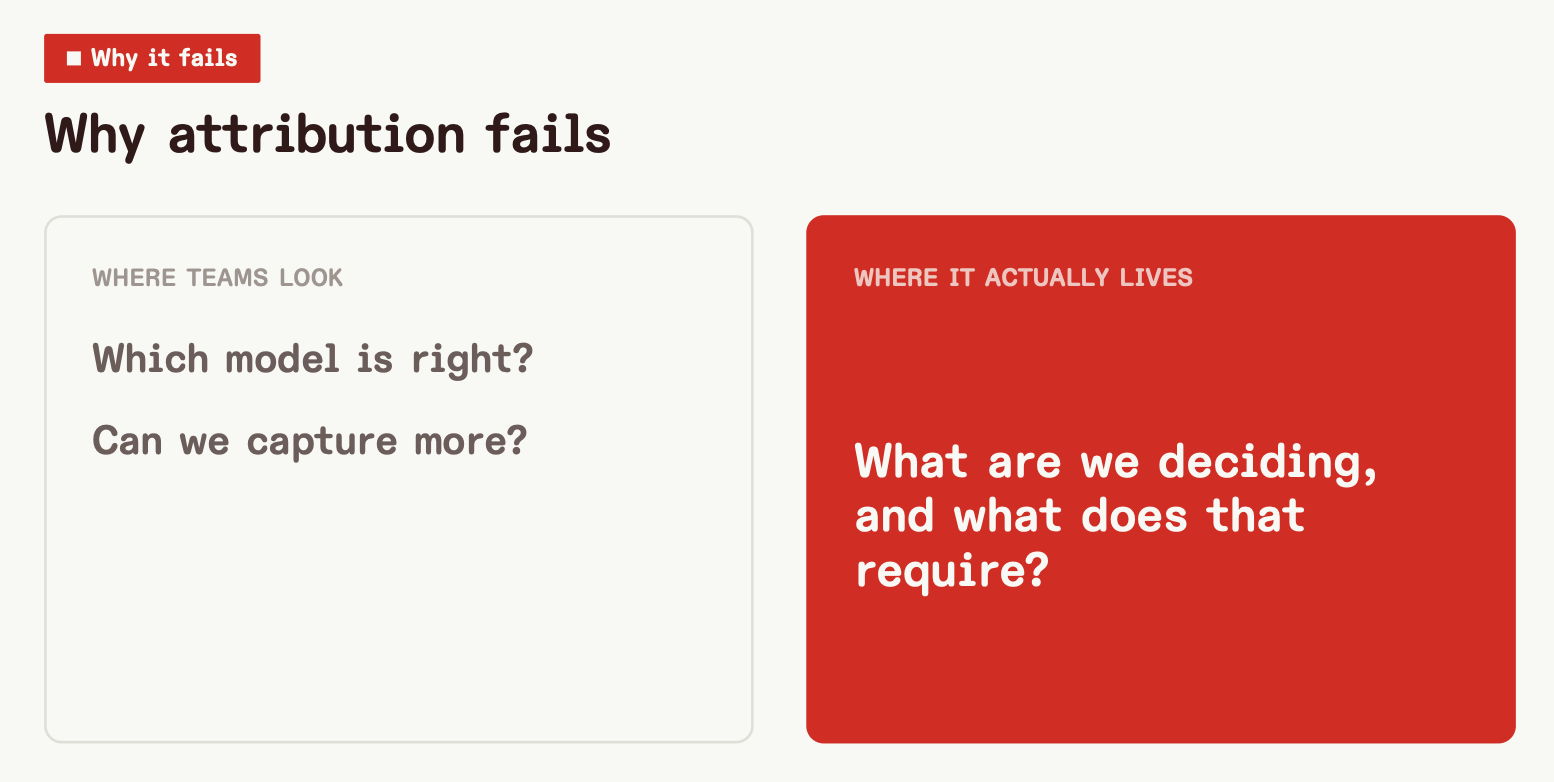
Attribution usually lives as an isolated box: a model bolted on at the end that’s supposed to hand marketing a verdict. Decisions get made somewhere else, and then attribution is asked to justify them after the fact.
That’s backwards. Attribution should start from your marketing strategy. You take the strategy, break it into the initiatives you’re actually running, and decide how you’ll measure each one as you plan it, not once it’s already live.
Take a podcast strategy. If you sit down when you launch it and ask how you’ll know it worked, you’ll build things into it that make it measurable: dedicated landing pages, a survey option, a voucher code specific to that partner. Do that, and you already know roughly what attribution you need. Skip it, and no model on earth will recover the signal after the fact, because there’s nothing in the data to recover.
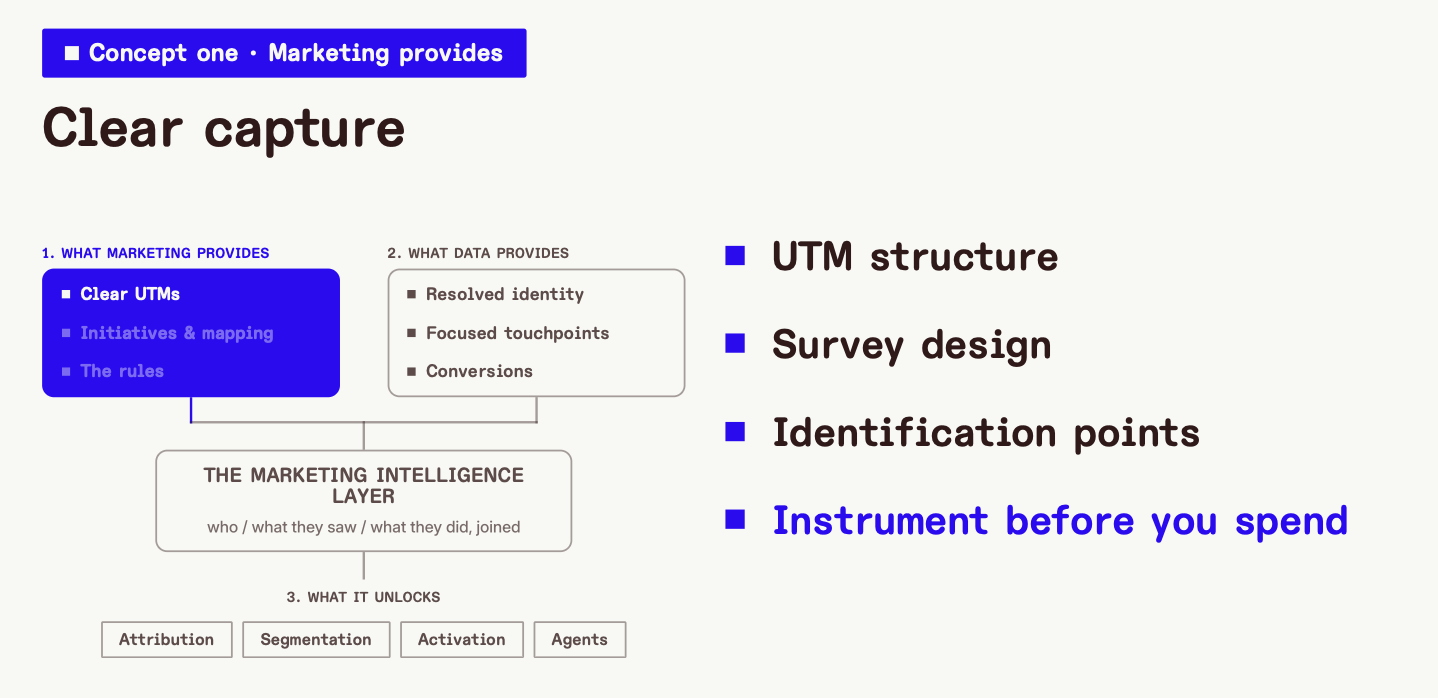
What this costs you when it’s wrong
The cost isn’t abstract. It’s budget moved in the wrong direction.
Here’s a real one, anonymised. A team switched from Universal Analytics to GA4 and ran both for a month, same data, same data-driven model on paper. The results differed wildly. On the new setup, affiliates looked dead. Close to no conversions. They brought me in because they wanted to cut affiliate spend entirely, convinced it had stopped working.
It hadn’t. The model had changed underneath them, and there was no way to see why: a new account, different inputs, a black box grading its own homework. They were one meeting away from killing a channel that was performing, on the strength of a number nobody could explain.
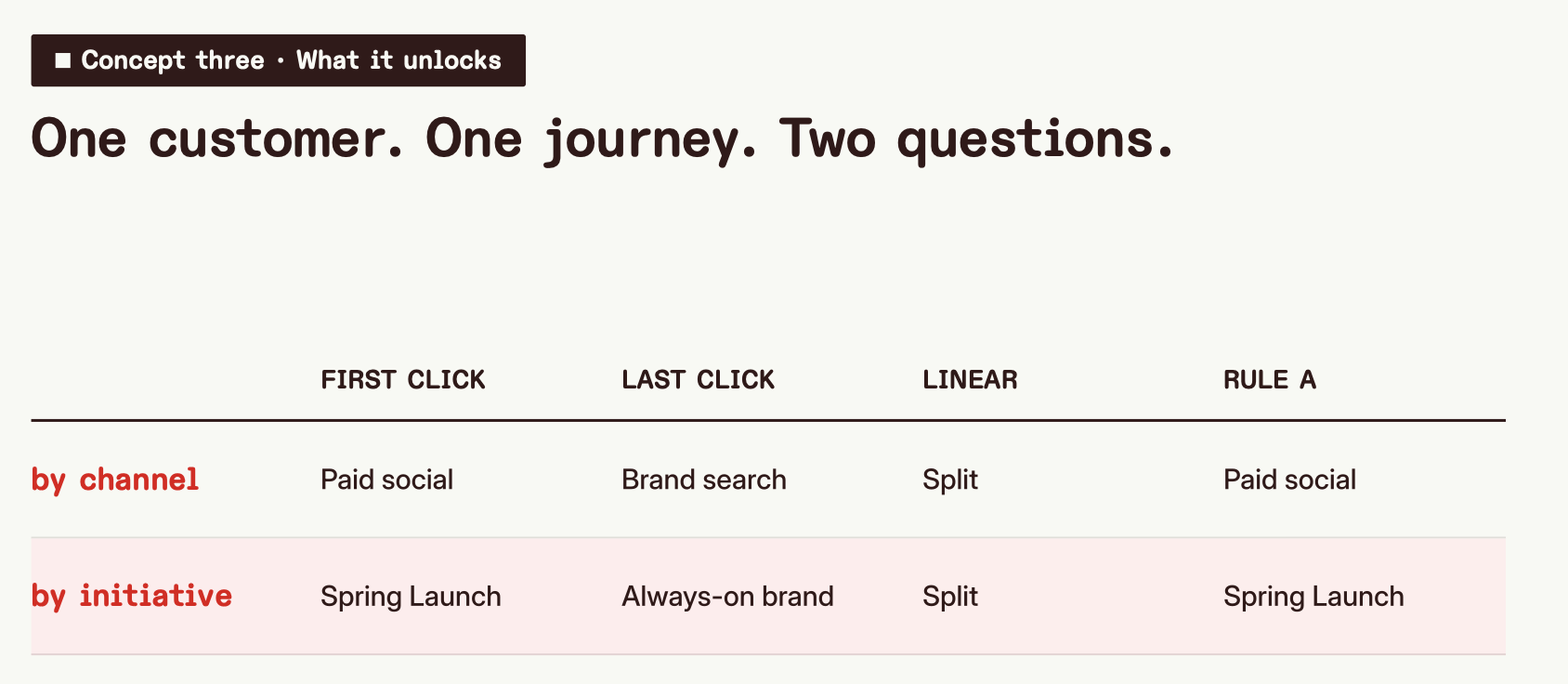
That’s the real price of a model you can’t open. Not that it’s slightly off, but that it moves spend, hides a working channel inside an average, and gives you no way to tell the difference between a real drop and a modelling artefact.
A more accurate model doesn’t settle the argument on its own
It might sound odd coming from a measurement agency, but a more accurate attribution model isn’t what we aim for first at Propel. What we aim for is that the people who use the model day to day, the marketing team, understand what it’s telling them and can make decisions on it with confidence.
We work on accuracy too. We combine different measurement methods, click-based data, “how did you hear about us” surveys, and incrementality tests such as geolift, so each one covers gaps the others leave and the journey we build is more complete. But if accuracy were the only thing we worked on, the work would be far less useful. A more accurate model still won’t move a decision forward if the meeting ends on “why does channel X have this many conversions and not channel Z?”
I talked through this recently with Alex Sofronas, along with why we started Propel, in a conversation on all things marketing analytics.
The fix is a model you can actually open
The single thing I’d protect above all else: if you can’t explain how a number was built, well enough to trace it back and show your working, nobody will trust it, and they shouldn’t.
A model you can audit beats one you can’t, almost regardless of how sophisticated the black box is. A multi-touch model you can interrogate will usually beat first or last click, because it’s more complete. But a model you can question and change beats a cleverer one you can’t, every time, because the value isn’t only in the number. It’s in being able to stand in the meeting and say exactly why a conversion was credited where it was.
That’s also what ends the rabbit hole. When the model is transparent, someone can say “I don’t think that’s the right way to treat this touch,” and instead of a standoff you have a baseline to refine. Marketing gets to own the rules: how a podcast touch is inferred when nobody clicks a link, which touch gets credit when someone hears you on a podcast, searches, gets a retargeting ad, then converts. Those are marketing decisions, and they belong with the people who hold the context.
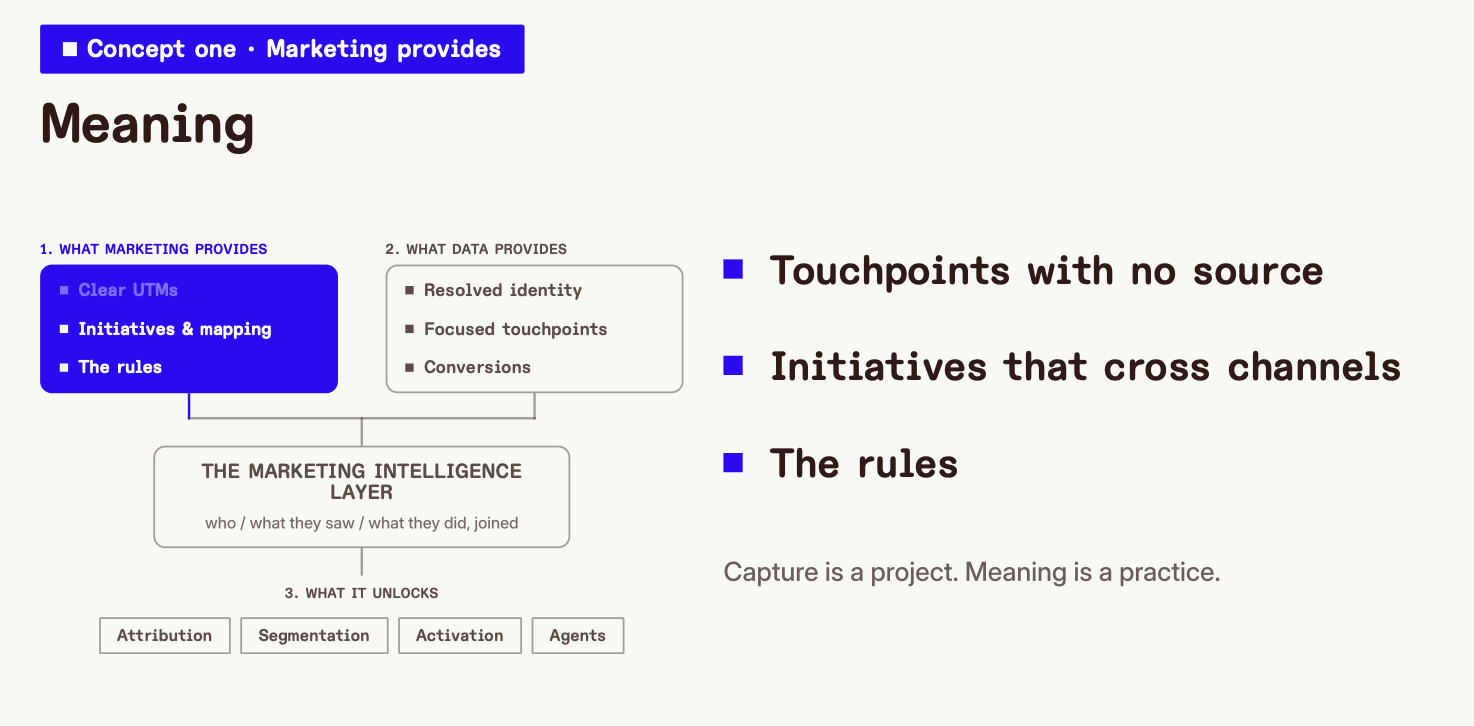
What “done well” looks like in your numbers
You’ll know it’s working when the planning meeting stops stalling on whether the numbers can be trusted and moves on to what to do about them. When you can defend paid social or podcasts with a figure you can trace, not just a hunch. When cutting a channel is a decision, not a reaction to a dashboard nobody understands.
None of this promises perfect attribution. Gaps stay. Some touches you’ll never capture, and some channels influence without ever leaving a trace, which is why experience, incrementality tests, and MMM still feed the rules. The aim isn’t certainty. It’s numbers you can explain, interrogate, and act on with confidence, and a model that improves each time you question it.
If you want to talk through what this would take for your own setup, book a call with us.
Propel builds bespoke marketing measurement and attribution setups that live in the data warehouse, where the modelling logic is transparent, auditable, and owned jointly by marketing and data teams rather than locked inside a black box.
More articles like this?
Enter your email below to receive our latest articles on marketing measurement:


 Future articles